
Construction Materials Energy Efficient
Energy efficiency in building materials means how well they control heat moving in and out of a house. Heat always moves from hot to cold. So, in summer, heat sneaks through walls from outside to inside, making rooms hotter. In winter, heat slips out from inside to outside, making heating bills climb. How fast heat travels through materials shows how good they are at keeping heat in or out. This is measured by the R-value, which tells how much insulation a material gives. When materials like drywall, bitumen, or stucco join in, the total R-value is called the mass-enhanced R-value, showing the true energy-saving power of the whole wall. Knowing these numbers helps pick the right stuff to save money and stay comfy. Keep reading to discover how choosing the right materials can seriously cut energy costs and boost comfort all year round.
The R-values of conventional stud wall surface construction utilizing either timber or steel studs with shielded wall surface cavities can differ relying on the dimension, make-up, and also spacing of the studs. Studs carry out even more warmth than insulation does consider that they prolong through the wall surface as well as have a little R-value. To accomplish any type of level of effectiveness with stud wall surface building, it is essential to cover the framework with an architectural protected panel of plywood or oriented strand board loaded with increased polystyrene (EPS) or other foam product, which leads to an R-value of 5.0 per inch of density.
Typical block masonry construction is among the extra energy reliable building approaches as compared to stud wall building and construction. A standard, 8″ hollow block has an R-value of 1.75, which is low enough to be considered energy efficient. Nevertheless, the R-value can be improved by adding foam insulation outside or inside the blocks (commonly the hollow block cores are loaded with grains or infused foam made from polystyrene or a comparable foam).
More energy efficient still is precast concrete wall building and construction, which is developed from high stamina concrete with reinforcing fibers and steel. The concrete is made even more energy efficient by building insulation right into it, which gives it an R-rating in the neighborhood of 12.5.
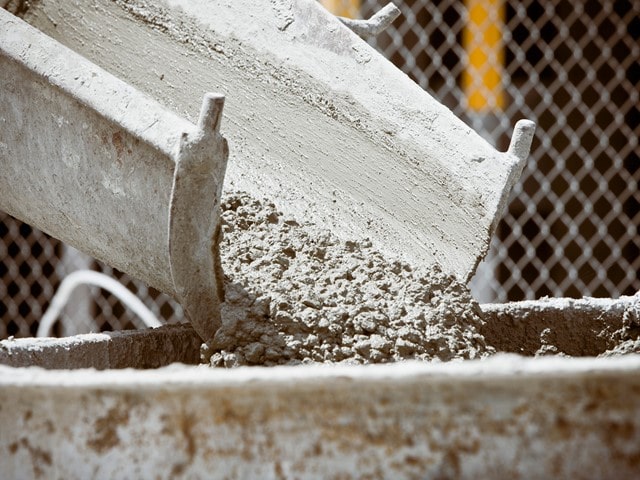
One of the most energy-efficient construction techniques is those which integrate concrete with insulating foam in an incorporated means. The state-of-the-art approach is called Insulated Concrete Type (ICF) construction, which is a strengthened concrete method far more power effective as well as quicker to set up than conventional block masonry or precast concrete walls. In an ICF building, hollow rectangle-shaped EPS foam kinds are stacked and lined with steel rebar, and after that full of concrete. When the concrete sets, the EPS foam which bonds to the concrete while doing so ends up being an inner as well as an external layer of insulation.
The forms interlock like a kids Lego collection and can be rapidly put together. The blocks are not produced to a structure’s exact specifications and also dimensions. The blocks have to be reduced to some extent to precise size and to make openings for doors and windows; however, this is easily done by hand. Because the within foam – concrete – outside foam construction creates a triple insulation obstacle, ICFs are one of the most efficient building products with R-40 or higher power scores.
For more information about energy-efficient building materials contact BalthazarKorab for further info.